
Planning a trip? Asking the Global room about places you haven't reached yet
The local rooms only open where you are, so ask the Global room before you travel. What to ask, what to keep to yourself, and how to hand over to the local rooms when you land.
CicadaChat's local rooms are wonderful once you've arrived somewhere: the 100 m room in your hostel, the 1 km room around your hotel, the 10 km room for the whole city. But they only open where you are. While you're still at home planning a trip, you can't sit in the 1 km room of a neighbourhood in Seoul. That's what the Global room is for. Planning a trip with the Global room means asking people who live in the place you're going, or who've just been there, before you've even packed. This article explains how to do that well, what to ask, what to keep to yourself, and how to hand over to the local rooms when you land.
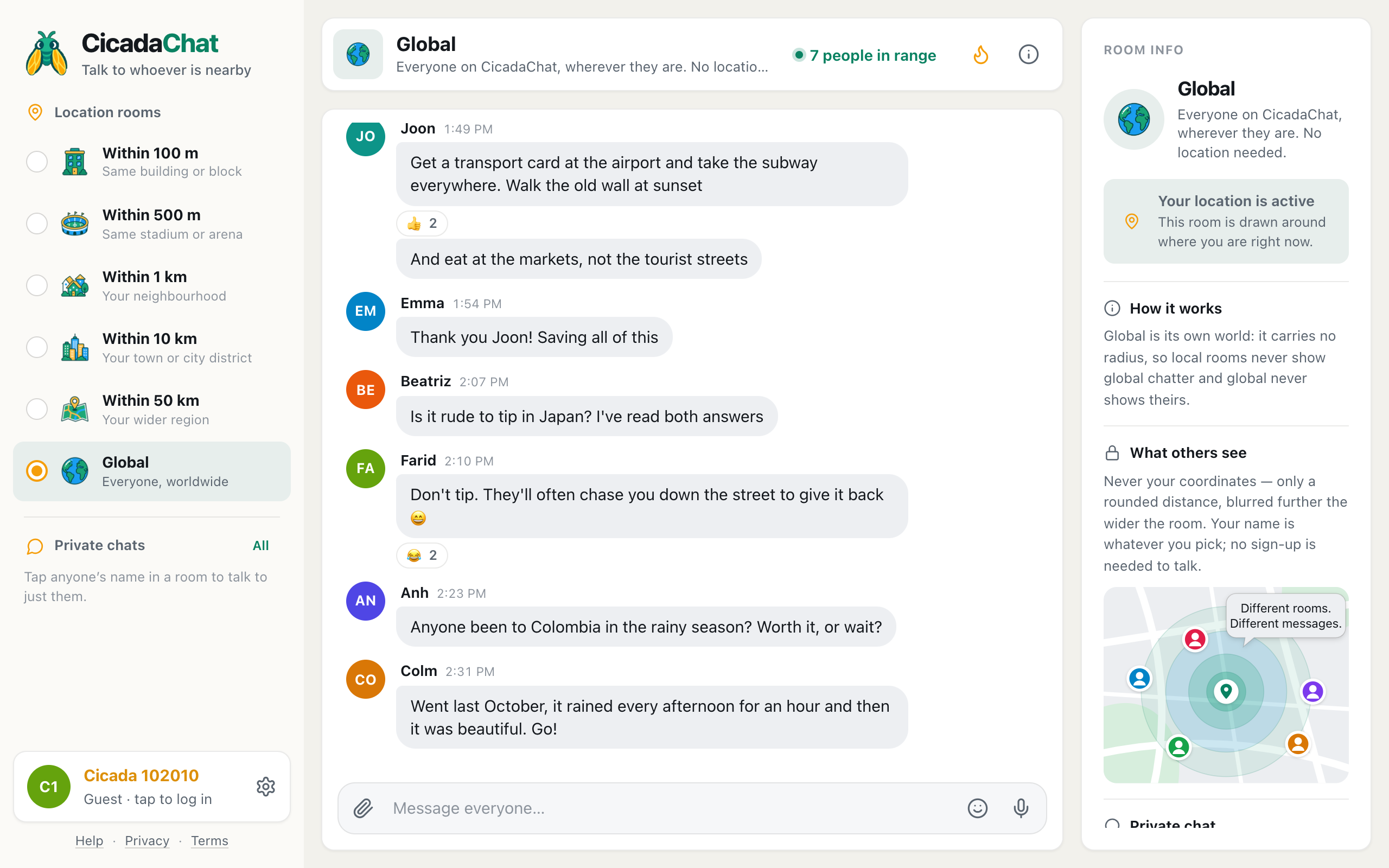
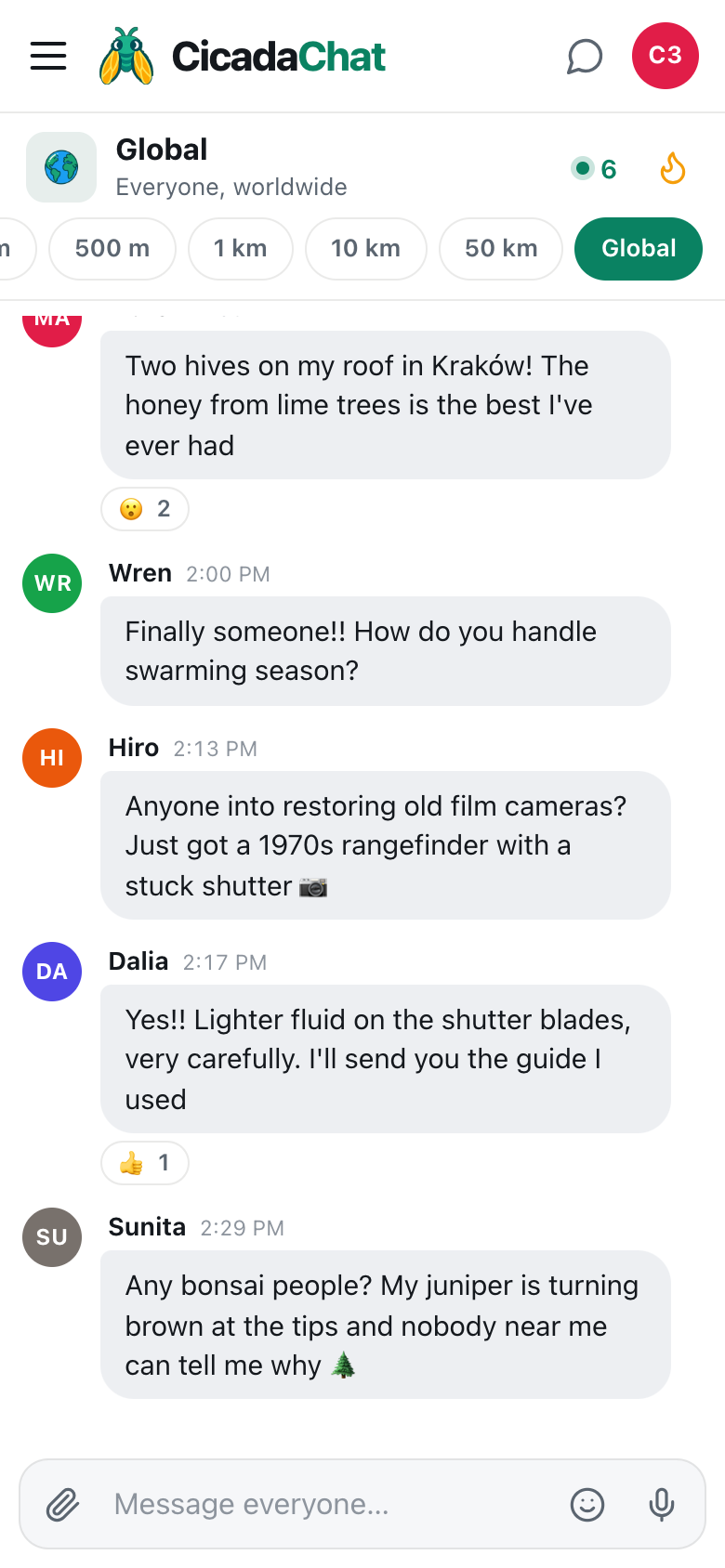
A screenshot of the Global room on a computer, where people planning trips ask others who live there or have been there.
Why ask the Global room
Travel guides go out of date, and review sites are full of people who were there for one afternoon. Global is different: it's a live conversation with people all over the world, and some of them live exactly where you're going. Others went last month. A few are from there and moved away, and will tell you what they miss.
The kind of answers you get are the ones that don't make it into guidebooks:
- "Get a transport card at the airport and take the subway everywhere."
- "Eat at the markets, not the tourist streets."
- "Don't tip. They'll often chase you down the street to give it back."
- "It rained every afternoon for an hour and then it was beautiful. Go!"
You don't need to share your location or even have it switched on. Global works without it, and nobody there sees where you are.
Writing a question that gets good answers
Global is busy and spans every time zone, so a good travel question is one that makes sense to someone who reads it hours later. A few tips:
- Name the place and the time of year. "Going to Seoul for the first time in November" gets far better answers than "going to Korea soon". Weather, festivals and crowds all depend on the month.
- Say what kind of trip it is. A week of food and markets, a hiking trip, a work trip with one free evening, a family holiday with small children. People tailor their advice to it.
- Ask one thing at a time. "Anything I shouldn't miss?" is a great opener. "Is it rude to tip?" is a great follow-up. A long list of questions in one message tends to get one answer to the easiest one.
- Ask the question you can't search for. Opening hours are online. "Is it worth going in the rainy season?" isn't.
Things worth asking
Here are the kinds of question that Global answers best, because they need someone who's been there:
Getting around
How do people really get from the airport to the centre? Is the metro easy for someone who can't read the alphabet? Are taxis safe late at night, or is there an app everyone uses instead? Is it a walking city, or will you regret not renting a bike?
Customs and manners
Tipping, greetings, what to wear to a temple, whether it's rude to eat while walking, whether you should take your shoes off. These are the things locals notice straight away and visitors get wrong without meaning to.
Weather and seasons
"Rainy season" can mean a downpour every afternoon or a week of grey drizzle. Someone who lives there, or was there last year at the same time, can tell you which, and whether it's worth waiting.
Food
Global loves a food question. Ask what you absolutely have to eat, what to avoid, and where the locals go. Expect strong opinions and at least one person offering to show you "the best stall".
What's on
Is there a festival, a match or a holiday during your dates? That can be the highlight of a trip, or the reason every hotel is full.
An example: three trips in one afternoon
The screenshot at the top of this article is a typical Global afternoon for travel questions. Emma asked what not to miss in Seoul in November, and Joon, who knows the city, answered in two messages: get a transport card at the airport, walk the old wall at sunset, and eat at the markets rather than the tourist streets. Emma saved the tips and thanked him. A few minutes later, Beatriz asked whether it's rude to tip in Japan, and Farid replied that people will often chase you down the street to give it back. Then Anh asked whether Colombia was worth visiting in the rainy season, and Colm, who went last October, said yes: an hour of rain every afternoon, then beautiful.
Three trips, three answers from people who knew, in less than an hour, and nobody shared a location or a booking.
What to keep to yourself
Global is the room with the biggest audience on CicadaChat, and messages can't be edited or deleted once they're sent. When you're talking about travel, a few things are better left out:
- Your exact dates and where you're staying. "Seoul in November" is fine. "Arriving on the 14th, staying at such-and-such hotel, room 402" is more than a room full of strangers needs.
- That your home will be empty. Say where you're going, not that your house is unattended while you're gone.
- Your passport, tickets and bookings. Don't post photos of them, even to ask a question about a stamp or a seat. Booking references and barcodes can be used by others.
- Shared locations. If you attach a location in Global, the warning says Everyone in the global room will see this exact spot, and it means everyone. Describe places in words instead.
If someone offers to meet you when you arrive, that's often lovely, but take it to a private chat first: tap their name to talk one to one, and get to know them a little before you decide.
Following up in private
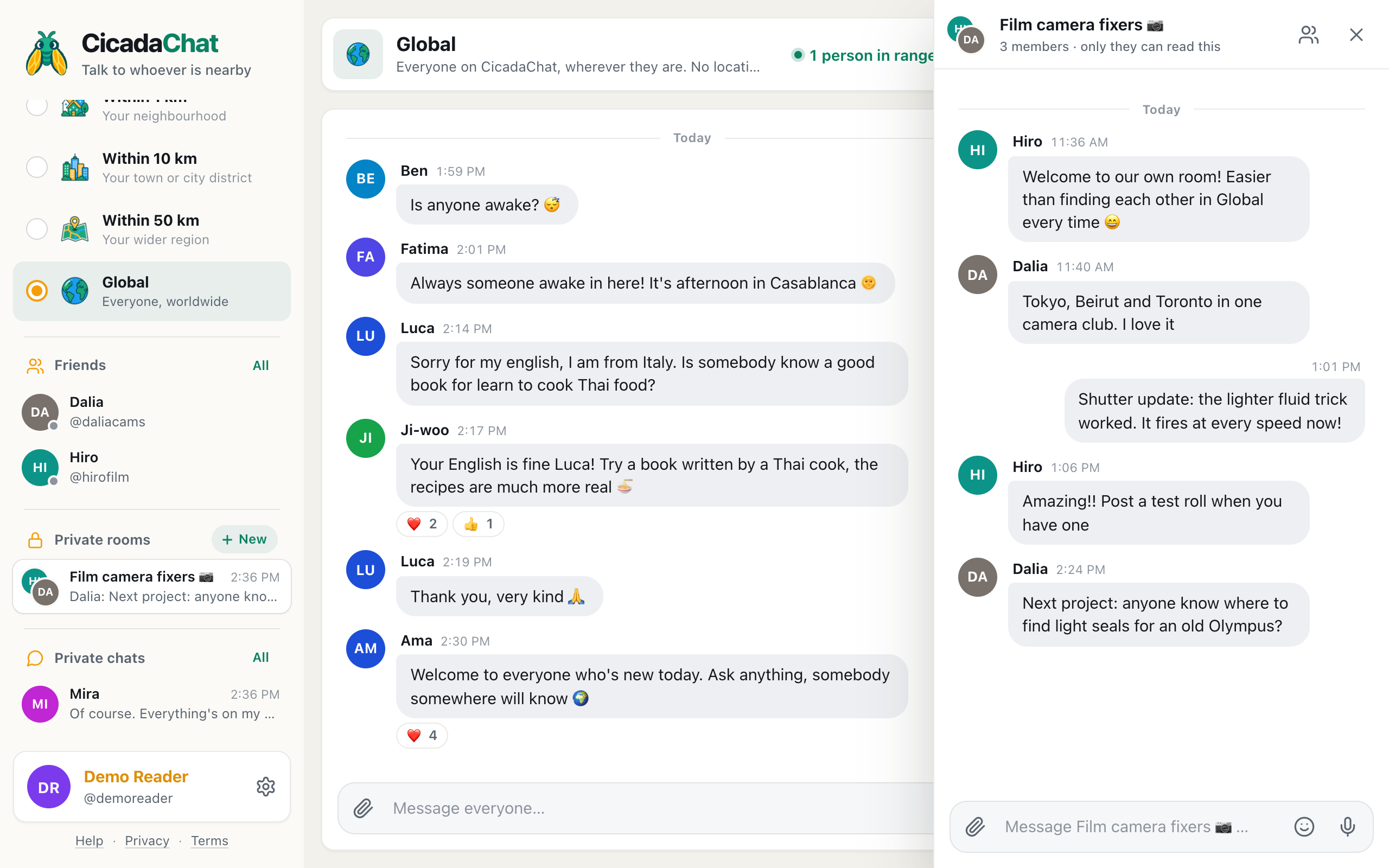
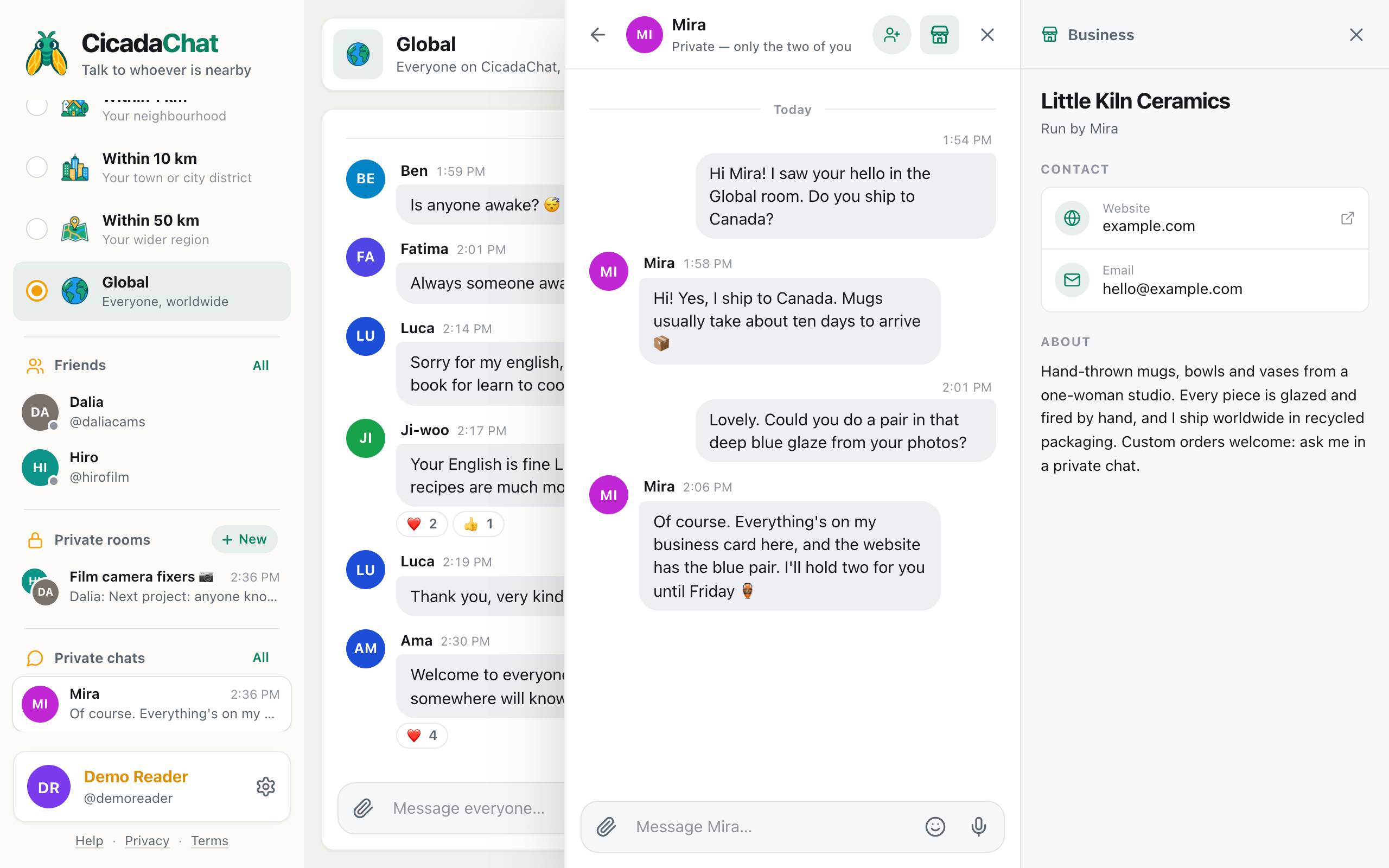
Travel conversations in Global often turn into long exchanges with one helpful person: a list of restaurants, a walking route, a warning about a scam at the train station. That's a good moment to move to a private chat, so the room stays open for the next question and you can keep everything in one thread. Tap the person's name on any of their messages to start.
If you have a registered account and so do they, you can also add them as a friend from the private chat, so you can find each other again easily once you're there. Friends see when each other is online, but never each other's location or distance.
When you arrive: switching to the local rooms
Once you land, CicadaChat becomes a different app. With location on, the local rooms open around wherever you are, and they're full of people who are there right now. They're the right place for questions like "which exit for the old town?" or "is the night market on tonight?", which the Global room can't answer as quickly.
- The 100 m room is your hotel or hostel: the people in the lobby, the rooftop, the rooms along your corridor. Meeting fellow travellers in your hotel or hostel with the 100 m room has ideas for using it.
- The 1 km room is the neighbourhood around you, good for food, directions and whatever's going on in the street.
- The 10 km room is the city. If you're staying a while, new in town: finding your feet in a new city with the 10 km room is written for exactly that.
Remember that the local rooms and Global are separate conversations. A question you asked in Global stays in Global. If you asked there, check back there for answers too.
Telling the room how it went
One of the nicest things you can do in Global is come back after your trip. "Went to Seoul in the end, walked the old wall at sunset like Joon said, and it was the best evening of the trip" makes the person who helped you very happy. It also helps the next traveller who scrolls back or finds your message in the Hot view.
And once you've been somewhere, you can be the one who answers. Next time someone asks about the city you just visited, you'll be the person with the fresh, specific tip.
Language on the road
Global is also a good place to practise a few words before you go: how to say thank you, how to order, how to ask for the bill. People there are often happy to help, especially if you offer to help with your own language in return. Practising a language with the world: language exchange in the Global room explains how that works.
In short
Before you travel, ask the Global room: name the place and the season, ask one thing at a time, and keep your dates, bookings and exact locations to yourself. Take long conversations to private chats. When you arrive, switch on location and let the local rooms take over. And when you're home again, come back and tell everyone how it went.
No comments yet. Start the conversation.